Bicycle Home Exercise
Add a review FollowOverview
-
Founded Date July 1, 1911
-
Sectors Forestry
-
Posted Jobs 0
-
Viewed 6
Company Description
See What Exercise Bicycle Tricks The Celebs Are Using
The Ultimate Guide to Exercise Bikes: Pedaling Your Way to Better Health
In the contemporary fitness landscape, home health club devices has seen an enormous surge in appeal. Amongst the most long-lasting and efficient pieces of cardio equipment is the modest stationary bicycle. Whether one is a skilled marathon runner searching for cross-training alternatives, a busy professional attempting to squeeze in an early morning workout, or a beginner taking the first actions towards a healthier lifestyle, the exercise bike for house bike uses a flexible, low-impact course to physical fitness.
This thorough guide checks out the world of stationary bicycle, examining their advantages, the different types readily available, crucial functions to look for, and how to make the most of results safely.
Why Choose an Exercise Bike?
Before diving into the mechanics of purchasing a bike, it is essential to comprehend why cycling is such a powerful workout. Unlike running, which puts a considerable amount of tension on the knees, ankles, and hips, biking is a low-impact exercise Bicycle. This means people can elevate their heart rate and develop lower-body strength without pounding their joints.
Secret Benefits of Indoor Cycling:
- Cardiovascular Health: Regular cycling enhances the heart, reduces high blood pressure, and improves total lung capability.
- Calorie Burning: Depending on intensity and body weight, a 45-minute stationary bike session can burn anywhere from 400 to 600 calories.
- Muscle Tone and Strength: Cycling mostly targets the quadriceps, hamstrings, glutes, and calves. Engaging the core to remain well balanced likewise offers abdominal engagement.
- Convenience and Safety: Weather, traffic, and darkness are never ever barriers when the bike is in the living room or home gym.
Kinds Of Exercise Bikes
Not all stationary bicycle are produced equivalent. Various designs cater to various physical fitness objectives, body types, and space restraints.
1. Upright Bikes
Upright bikes carefully mimic the feel of riding a conventional outdoor bicycle. The user sits upright, and the pedals are placed directly underneath the body.
- Best for: General physical fitness, high-intensity period training (HIIT), and roadway biking simulation.
- Pros: Engages core muscles more than other styles; uses up less floor space.
- Cons: Can cause neck or lower back strain for newbies throughout long sessions.
2. Recumbent Bikes
Recumbent bikes feature a bigger, bucket-style seat with a back-rest. The pedals are placed out in front of the user rather than below.
- Best for: Rehabilitation, elders, people with back pain, and longer, steady-state cardio sessions.
- Pros: Excellent lower back support; incredibly comfy; puts extremely little pressure on joints.
- Cons: Generally has a bigger footprint; less effective for upper-body or core engagement.
3. Indoor Cycles (Spin Bikes)
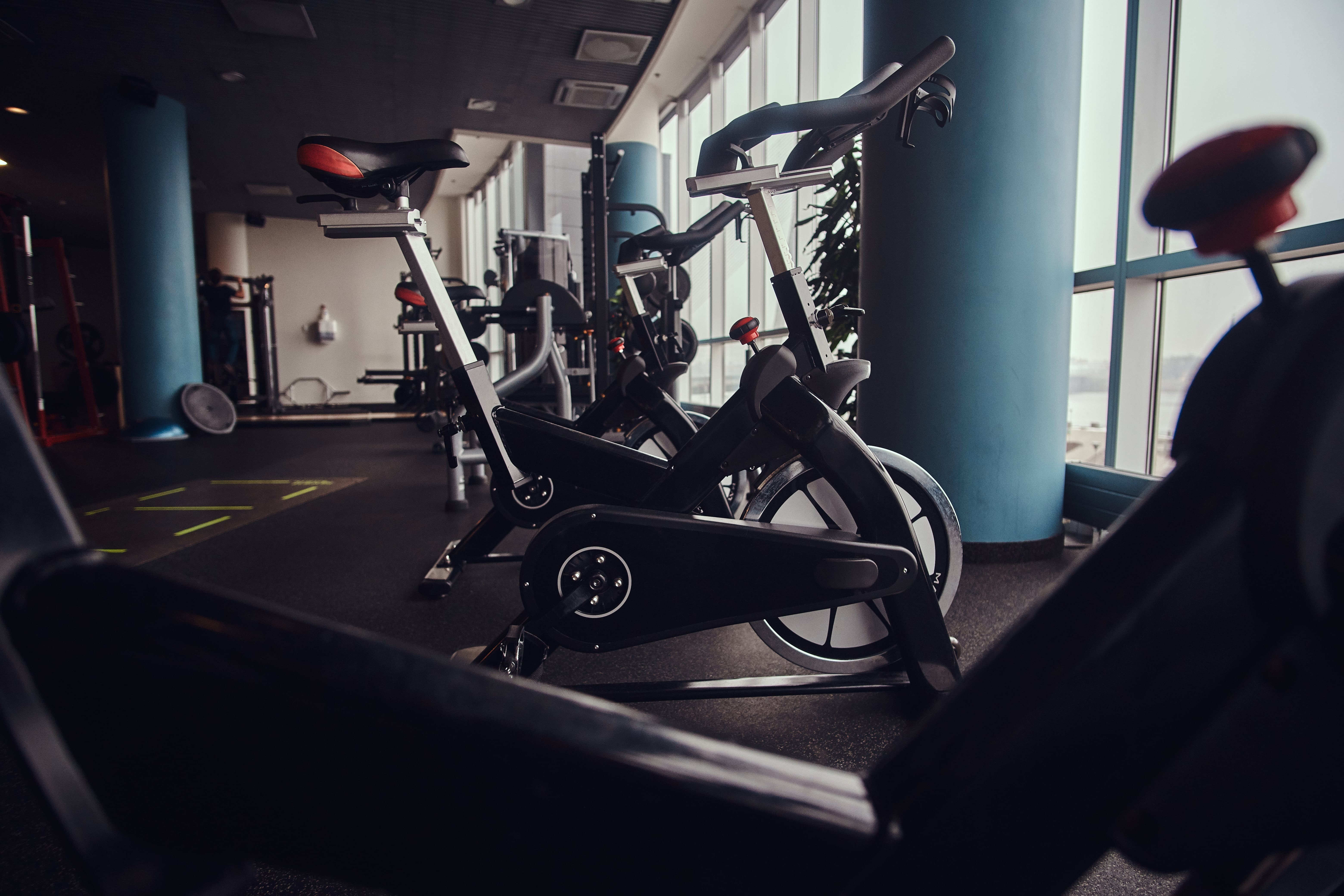
Spin bikes are created to imitate outside racing bikes. They feature heavy weighted flywheels (typically managed by friction or magnetic resistance) and handlebars that permit the rider to stand up and pedal, simulating hill climbs up.
- Best for: Serious bicyclists, spin class enthusiasts, and high-intensity exercises.
- Pros: Highly durable; permits for out-of-the-saddle riding; highly customizable resistance.
- Cons: Seats can be unpleasant at first; needs appropriate kind to avoid injury.
Comparing Exercise Bike Types
To assist figure out which device best suits specific requirements, the following table breaks down the key differences:
| Feature | Upright Bike | Recumbent Bike | Indoor Cycle (Spin) |
|---|---|---|---|
| Body Position | Upright, slight forward lean | Reclined with back assistance | Aggressive forward lean (racing design) |
| Back Support | None | High, supportive backrest | None |
| Primary Muscle Focus | Quads, calves, core | Quads, glutes, hamstrings | Quads, glutes, calves, core |
| Impact Level | Low | Very Low | Low |
| Footprint | Compact | Moderate to Large | Compact |
| Suitable User | General physical fitness enthusiast | Seniors, injury healing, convenience candidates | Advanced professional athletes, spin class fans |
Key Features to Consider Before Buying
Acquiring a stationary bicycle is a financial investment in one’s health. To make sure the ideal option is made, consumers need to evaluate the following functions:
- Resistance Mechanism:
- Friction Resistance: Uses pads that push against the flywheel. It is frequently less expensive, however pads wear with time.
- Magnetic Resistance: Uses magnets to create tension. It is practically silent, smoother, and needs almost no upkeep.
- Flywheel Weight: For spin bikes, a heavier flywheel (generally 30– 40+ pounds) provides a smoother, more natural momentum-driven pedal stroke.
- Console and Connectivity: Modern bikes often include LCD screens, Bluetooth abilities, and combination with physical fitness apps (like Peloton, Zwift, or iFit) for live and on-demand classes.
- Adjustability: Ensure the seat can adjust both vertically and horizontally, and check if the handlebars offer several grip positions.
Tips for Maximizing Your Workout
Just getting on the bike is the very first action, but optimizing method ensures safety and faster outcomes.
- Set Up the Bike Correctly:
- Seat Height: When the pedal is at the most affordable point, the knee ought to have a slight bend (about a 25-to-30-degree angle).
- Handlebar Height: Should be comfortable enough to prevent slouching, keeping the spine neutral.
- Incorporate Interval Training: Alternate between high-resistance sprints and low-resistance recovery durations to enhance cardiovascular endurance and torch fat more efficiently.
- Maintain Proper Posture: Keep shoulders unwinded, chest open, and core engaged. Avoid gripping the handlebars too securely, as this puts unneeded tension in the wrists and neck.
- Consistency is Key: Aim for 3 to 5 sessions each week, integrating moderate-length endurance rides with much shorter, high-intensity workouts.
Test Beginner Weekly Routine
For those not sure of how to structure their stationary bicycle routine, the following schedule provides a well balanced approach to beginning:
- Monday (Endurance): 30 minutes of steady-state riding at a moderate, conversational rate.
- Tuesday (Strength): 20 minutes concentrating on high resistance, replicating a hill climb.
- Wednesday (Active Rest): 15 minutes of light, simple spinning to flush out the legs.
- Thursday (Intervals): 25 minutes total– alternate 1 minute of high-intensity sprinting with 2 minutes of simple healing, repeated 7 times.
- Friday (Rest Day): Complete rest or light stretching.
- Saturday (Fun Ride): 35-45 minutes at a comfortable speed while listening to music or enjoying a show.
- Sunday (Rest Day): Recovery.
The exercise bike for sale bike remains a staple in the physical fitness world for good factor. It is effective, safe, versatile to all physical fitness levels, and can be delighted in from the convenience of home regardless of the weather exterior. By comprehending the distinctions between upright, recumbent, and spin top exercise bikes, and by picking functions that line up with individual objectives, anybody can find the ideal maker to change their fitness journey.
Pedal with purpose, remain consistent, and take pleasure in the trip to a healthier, more powerful self!